Software development outsourcing delivers real value when the location is chosen deliberately. In that context, Slovakia stands out as a strong option in Central and Eastern Europe.
Political and economic stability, EU regulatory alignment, skilled engineers, overlapping working hours, and rational pricing reduce the typical outsourcing risks. That’s why more companies in Western Europe and the US are choosing Slovakia over overcrowded, less predictable markets.
If you’re evaluating software development outsourcing in Slovakia and want a clear view of actual costs, read on. Below, we break down realistic pricing ranges, and the factors that drive them.
Slovakia as a destination for software development outsourcing
Slovakia has never topped lists of leading outsourcing hubs, but it’s steadily climbing the charts. The growth of the local IT outsourcing market is being driven primarily by the country's highly skilled workforce, welcoming business environment, and affordable cost structure.
As of now, there are about 50,000 software developers in Slovakia, and their number is growing, fostered by high demand for IT services. With over 16,000 IT companies, the ICT sector comprises 4.5% of Slovakia's GDP, which is a strong indicator of its role in the national economy.
The government is also actively supporting digital growth. Coordinated through the Office of the Deputy Prime Minister for Investments and Informatization, the 2030 Digital Transformation Strategy for Slovakia is aimed at enhancing the country’s digital economy and fostering innovation through the adoption of advanced technologies like AI, IoT, 5G, big data, blockchain, and high-performance computing (HPC). So, we’ll surely see more achievements in the local ICT sector soon.
But why do companies choose Slovakia as a software development destination already today? Here are a few key factors:
1. Eurozone stability
Slovakia uses the euro as well as EU legal and regulatory frameworks. Therefore, you will face a minimum of legal and compliance issues. For long-term contracts, this is often more critical than high rankings.
2. Strong engineering culture
When you hire developers in Slovakia, you can expect excellent technical backgrounds and a practical, problem-solving mindset. Slovak teams build things that work, not just things that demo well. You will hear no buzzwords but clear roadmaps.
3. Seamless communication
Most of the population in Slovakia has a good command of English, and software engineers are particularly proficient in it. Daily communication, technical discussions, and documentation creation usually happen without tension.
4. Cultural compatibility
The Slovak working style aligns well with Western and Northern European companies. Time zones overlap nicely, communication is effective, and expectations around deadlines, accountability, and quality are similar.
5. Well-developed technical niches
Slovak developers are exceptionally strong in a number of areas:
Fintech (payments, banking platforms, compliance-heavy systems)
Embedded development (automotive, IoT, hardware-adjacent software)
Logistics & supply chain software
Profound knowledge of these domains isn’t accidental. In fact, it reflects Slovakia’s industrial foundation and rich engineering heritage.
Though IT outsourcing in Slovakia continues to evolve, the country definitely has a lot to offer for clients who prioritize top quality, proficiency, stability, and smooth communication.
A complete guide to outsourcing software development to Slovakia
Average rates of software developers in Slovakia (2025)
Let’s get straight to the point and talk about typical rates you’ll see when dealing with Slovak vendors. There are nuances, but knowing the rough ranges helps you judge proposals realistically.
The table below shows the average rates for Slovak developers.
Average hourly rates of software developers in Slovakia
Avg. hourly rate on the market
Avg. hourly rate of junior developers
Avg. hourly rate of middle developers
Avg. hourly rate of senior developers
Source: Resquad AI
These rates aren’t what developers put in their pockets. In essence, they usually include:
The engineer’s actual salary
Employer taxes and benefits
Office, tooling, admin, and legal overhead
What impacts software development costs in Slovakia?
The cost of software development in the country, as anywhere else, isn’t fixed. There are several factors that affect it:
Seniority
Experience always matters. A software engineer who has been shipping products for a decade naturally costs more than one who jumped into the profession two years ago. The table above demonstrates this difference between senior, middle, and junior levels.
Specialization
Stack is also a critical factor. Specialists in emerging or rare technologies, frameworks, and languages have higher rates than those with widely spread stacks. That’s not because vendors are so greedy, but because these skills are harder to hire and replace.
Annual salary of Slovak developers across different specializations
Specialization
Average
Junior level
Middle level
Senior level
Source: Jobicy
Domain expertise
A senior JS developer building common web apps usually costs less than a developer designing safety-certified software for industrial robotics. In general, local engineers specialized in particular domains cost more but save you money in the long run thanks to experience, profound knowledge, and speed.
Engagement model
How you hire also makes a difference. As a rule, fixed-price projects include a safety buffer since vendors need protection against scope creep, unclear requirements, and last-minute changes. Time & materials, in turn, are more transparent. You pay for actual hours worked, adjust scope as you go, and see where the budget is going.
Same team, same skills – different engagement model, different final numbers.
Vendor reputation and size
Reputation has a price, too. Smaller or newer vendors may quote less to win work. Reputable companies with well-established processes and low churn usually charge more just because they can. In this case, you pay not only for code but also for predictability and reduced delivery risk.
Project complexity
No need to say that complex projects live in very different cost brackets. Things that push rates up include:
Performance-critical systems
Heavy integrations with legacy or third-party platforms
Strict compliance requirements
Complex architecture decisions that need senior involvement from day one.
On-site visits
Slovak teams are mostly remote-friendly, but if your project requires on-site workshops or regular visits, costs inevitably increase. Tickets and accommodation add up noticeably. So it’s worth deciding early whether face-to-face meetups are truly necessary.
Slovakia vs. Poland vs. Romania: Cost comparison
To understand whether Slovakia development rates are reasonable, it’s worth knowing the offerings of other countries. Primarily, we’d like to compare Slovakia with two other most prominent and huge outsourcing players in the region – Poland and Romania.
Average hourly rates of software developers in Slovakia vs. Poland vs. Romania
Country
Junior developers
Middle developers
Senior developers
Source: Resquad AI
Poland is the most expensive of the three, which is mostly driven by high demand. The country has a massive tech pool, a high concentration of multinational R&D centers, and global brands competing for the same engineers. As a result, even the rates of junior developers are higher here. Senior specialists, especially architects or niche experts, may quickly move into the premium category. Poland usually makes sense for complex, enterprise-scale projects where depth of experience and team scalability are more important than strict cost control.
Romania, in turn, offers the lowest entry point. Local junior and middle developers are much cheaper, which makes the country attractive for cost-sensitive projects, early-stage products, or large teams made up of mid-level talent. Rates for senior developers for hire can still climb, but usually they remain below those in Poland and slightly below those in Slovakia.
Slovakia lands somewhere in the middle. Junior- and middle-level rates are competitive, and senior rates stay quite predictable. You rarely encounter extreme spikes unless you hire for very niche expertise. For many companies, Slovakia is a ‘comfort zone’ with balanced pricing, strong engineering quality, and EU standards.
In travel terms, Poland can be viewed as business class, Romania as economy, and Slovakia as premium economy, still affordable but with pleasant extras.
Slovakia vs Poland vs Romania: Where to hire the best developers?
Monthly costs for common team compositions
Knowing hourly rates is helpful, but not enough. So let’s see how much a Slovak team can cost you per month based on its setup. For simplicity, our examples suggest full-time engagement and a time & materials model.
Example 1 – A small startup team
It works best if you need to build an MVP, validate new features, or replace a small in-house team.
Team setup:
Approximate monthly cost: $14,000–$21,000
What is good about this setup is that you don't pay senior rates until you need them. You just bring in middle developers skilled enough to build core functionality and fast enough to move quite quickly.
Example 2 – A scaling product team
This setup is suitable if your roadmap is growing and you wish to release faster.
Team setup:
Approximate monthly cost: $33,000–$47,000
A team of this kind enables parallel feature development, synced work on mobile and web, and CI/CD support. However, the exact monthly cost depends on the seniority balance that you’ve chosen. Taking one senior developer instead of a mid-level one makes your budget go up, but in many cases, it also speeds up the development process.
Example 3 – Enterprise-grade engagement
Do you work in regulated sectors, have a complex project, or create a mission-critical system? An enterprise-scale team is what you need.
Team setup:
Senior BE and FE engineers,
Architects and, often, a delivery manager.
Approximate monthly cost: Much higher than for other teams.
With such a dedicated team in place, you get broad domain expertise, security and compliance inserted into the process, forward-sighted architectural decisions, and steady delivery. To be honest, the costs of enterprise-grade engagements vary too much to give you a particular number. What you also pay here for is reliability and accountability.
Hire software developers in Slovakia
Hidden costs you may face
Whatever outsourcing destination you choose, there is always the chance of hidden costs. As a rule, they arise not because of bad intent but because no one considered some things at the beginning.
Vendor switching costs
Changing a vendor mid-project is tough. It isn’t just handing over the code and moving on. A new team needs time to get onboarded, analyze architecture, code, and workarounds, and grasp the concept. Thereby, velocity slows, and costs rise.
Tip: Avoid switching a vendor unless there’s a really strong reason. If a transition is unavoidable, insist on knowledge transfer and proper documentation. A smooth handover helps make the switch less painful and expensive.
Knowledge transfer & onboarding time
Time spent explaining a product, domain, and edge cases is still time you pay for, even though no code is written yet. This is normal but often overlooked. Interestingly, the study shows that developers estimate it takes up to 100 days to fully onboard, while 71% of executives assume it takes around 60 days.
Tip: Plan onboarding as a project phase, not a side activity. Structured documentation, knowledge bases, and guides can shorten it immensely.
Security & compliance requirements
If you’re in fintech, healthcare, or anything regulated, security audits, access controls, extra testing, and documentation add effort and cost.
Tip: Talk through security and compliance before signing a contract with a vendor. You must be sure they can introduce them into the process early, as it’s way cheaper than adopting them later.
Change requests and scope creep
Requested small changes rarely stay small. Usually, they turn into a week-long task. At Devico, we’ve seen this hundreds of times. Not surprisingly, projects with scope creep run about 27% over budget on average.
Tip: If requirements are evolving, we recommend you opt for a time & materials model. It’s more transparent and less likely to turn into endless negotiations over scope and pricing.
Underestimating QA effort
Quality demands QA efforts. Manual testing, automation, and performance checks take time. Skip any QA activity, and you’ll pay later to fix what could have been caught early.
Tip: Proper testing saves money, though not immediately. Our advice is to plan QA in advance.
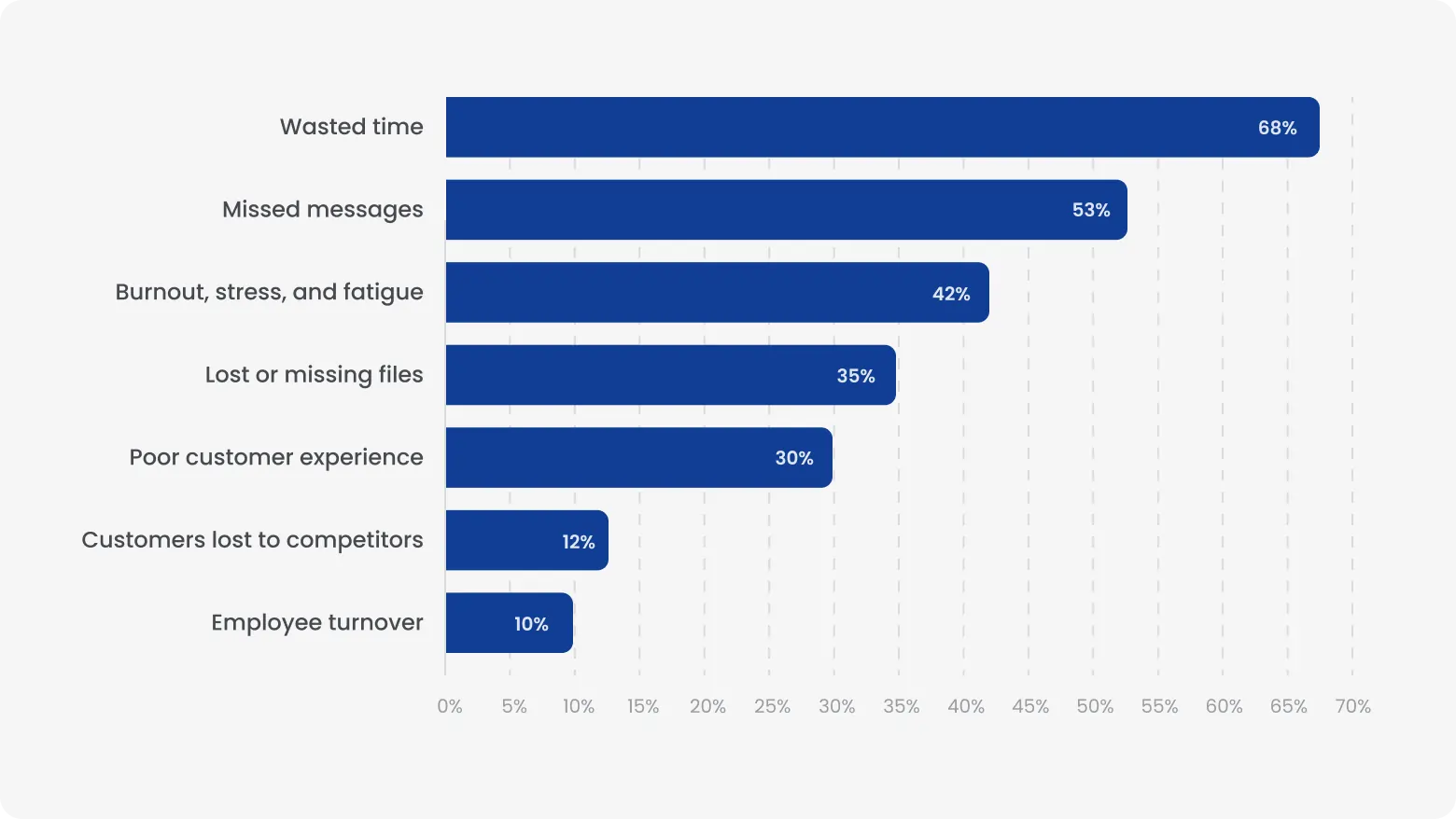
Inefficient communication loops
Long feedback loops, unclear ownership, and numerous meetings slow everything down, and you pay for that time too.
The cost of poor communication in business
Source: Project.co
Tip: Clear roles, direct communication channels, and fewer but more effective meetings can help a lot.
While there is a range of possible hidden costs, this doesn’t mean outsourcing is risky, but that it needs to be done thoughtfully. The right partner helps you avoid surprises instead of billing you for them later. That’s exactly how we approach delivery at Devico: fewer ‘gotchas’ and more predictability.
So, is Slovakia the right choice for your outsourcing project?
The right location removes problems before they appear. That’s why requirements should come first – not market hype.
Slovakia is a strong option if you need:
deep backend, fintech, or embedded expertise
reasonable, predictable pricing
stable, long-term collaboration
full alignment with EU standards
It’s less suitable for large-scale, rapid hiring. In those cases, Poland offers more volume. If cost efficiency is the primary driver, Romania is often a better fit.
Whether Slovakia, Poland, or Romania makes the most sense, Devico helps teams choose the right setup and execute the transition without unnecessary risk.
Great software starts with great people