Though we all heard about recent layoffs at Amazon, Intel, Microsoft, Salesforce, Meta, Google, and other tech giants, the global IT industry keeps evolving. The projection of the U.S. Bureau of Labor Statistics about a 15% increase in overall employment of software developers, QA analysts, and testers from 2024 to 2034 proves this.
Today, facing talent gaps, both US and European companies often turn to outsourcing, and Eastern and Central Europe are the main options they consider for this. Yet, this region isn’t homogeneous, with each country having its own cons and pros.
Within this busy environment, Slovakia is often overshadowed by its larger neighbors. Yet, the country offers highly educated specialists, EU-aligned regulations, and stability. While its market isn’t the biggest in the region, it’s known for quality and favorable business conditions, which is exactly what many teams need.
If you’re evaluating where to build or extend your development team, Slovakia is an outsourcing destination worth examining closely. Therefore, at Devico, we’ve created this guide to walk you through the key aspects of outsourcing software development to Slovakia, including real costs, talent availability, legal factors, risks, and picking a partner who can actually deliver.
Why companies outsource software development to Slovakia
While some view Slovakia as an underdog among European outsourcing countries, others know exactly why they’ve chosen it. In fact, the reasons are pretty clear.
First off, Slovakia is in the Eurozone. This brings stability, which is the thing businesses like. See for yourself: you deal with clear regulations, familiar EU standards, and one of the world’s most reliable currencies – the euro.
Next, the country has a strong engineering culture. Technical education is taken very seriously here, and local universities deliver highly proficient developers with hands-on experience. As a result, Slovak companies boast teams that can handle complex projects without ongoing supervision or hand-holding.
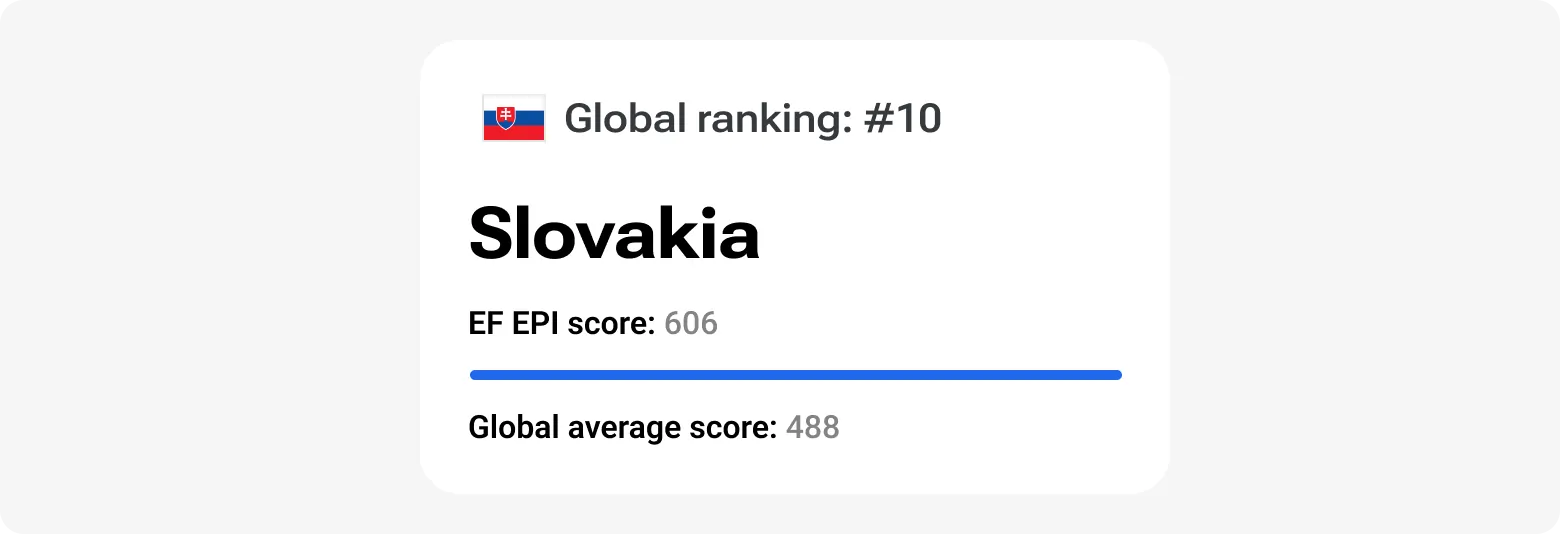
English proficiency is another factor. Slovak tech professionals have a good command of English. You will not need to decode ambiguous messages or guess what your developer meant, which is so frustrating, especially in high-pressure situations. Clear, professional communication is what you can expect from a Slovak outsourcing partner.
One more reason is cultural compatibility with Western Europe. Business norms, work ethic, and professional expectations are practically the same, and this adds to the smoother collaboration.
The same time zone as in the EU and just a one-hour difference with the United Kingdom also make Slovakia an appealing nearshoring destination. Overlapping working hours mean daily standups, easy sprint planning, and urgent bug fixes without anyone sacrificing sleep.
Finally, while Slovakia isn’t the cheapest option compared to countries in Eastern Europe, operational costs here are still lower than in Western Europe. You can bring in really top software developers without paying Zurich- or London-level salaries.
All in all, Slovakia offers a happy medium between stability, skills, collaboration, and cost. So, for companies wishing to outsource without surprises, this often turns out to be a very good option.
Slovakia vs Poland vs Romania: Where to hire the best developers?
How much does it cost to hire developers in Slovakia?
Money makes the world go round – at least the business world. Therefore, let’s talk about how much you will have to pay for a software developer in Slovakia.
The average rates of local software developers with different seniority levels are the following:
Junior developers: $25/hr
Mid-level developers: $40/hr
Senior developers and tech leads: $50+/hr
Of course, these numbers aren’t fixed. Along with seniority, project complexity and the tech stack can push costs up or down. Developing a simple e-commerce website is one thing, while building a fintech platform with AI components is another. As a rule, niche stacks or highly specialized engineers come with premium rates. For instance, Jobicy provides the following average annual salaries for the following roles in Slovakia:
Blockchain developer: $68,300
Mobile developer: $63,300
JavaScript Developer: $50,800
It would also be interesting to compare Slovakia with its neighbors in terms of the rates.
Average hourly rates of software developers
Country
Junior developers
Middle developers
Senior developers
Source: Resquad AI
Software development services in Slovakia cost slightly less than in Poland and the Czech Republic but a bit more than in Romania or Bulgaria. Why is it so? The reasons are rooted in economics, workforce structure, and market maturity.
Compared to Slovakia, Poland and Czechia have much larger tech sectors with more multinational R&D centers and deep-pocketed tech companies hiring there. So, developers in those countries compete for jobs from global brands that pay really well. And you know – when big players are in the market, salaries rise for everyone. In Slovakia, in turn, most vendors are rather small and work with startups or mid-sized businesses rather than Fortune 500 giants. Because of tighter budgets and fewer high-paying enterprise clients, salaries simply don’t get pushed upward.
At the same time, Slovakia offers higher rates than Romania and Bulgaria, which is mainly explained by the higher cost of living. Its index in Slovakia is 46.7 compared to 37.5 and 38.3 in Romania and Bulgaria, respectively. Local wages, taxation, and social contributions are also closer to Western European norms. Besides, Slovakia offers EU-aligned regulations, strong engineering education, and a high level of business stability, which usually comes with a slightly higher price tag compared with cheaper markets in Eastern Europe.
Market maturity is another factor. Over the years, Romania and Bulgaria have been positioning themselves as larger-scale and cost-efficient outsourcing hubs. Slovakia, in contrast, occupies another niche, being a quality-first nearshore destination, where companies pay a bit more but get peace of mind and reliability.
Outsourcing software development costs in Slovakia: all you need to know
Talent pool & technical strengths
Though the Slovak tech pool isn’t as huge as the Polish or Romanian, the country still has something to offer.
Stats reveal that there are about 50,000 software developers in Slovakia. In fact, the share of ICT specialists accounts for approximately 4.2% of total employment, which is close to the EU average of 5%. Yet, the European Commission report of 2025 highlights a very good increase in the share of ICT specialists in the country. Software development in Slovakia is gaining momentum steadily. Partially, this result has been achieved thanks to the National Digital Skills Strategy that prioritizes ICT specialists, digital skills in education and the labor market, and gender diversity in ICT. This tendency also reflects a maturing tech market that continues to grow as demand rises.
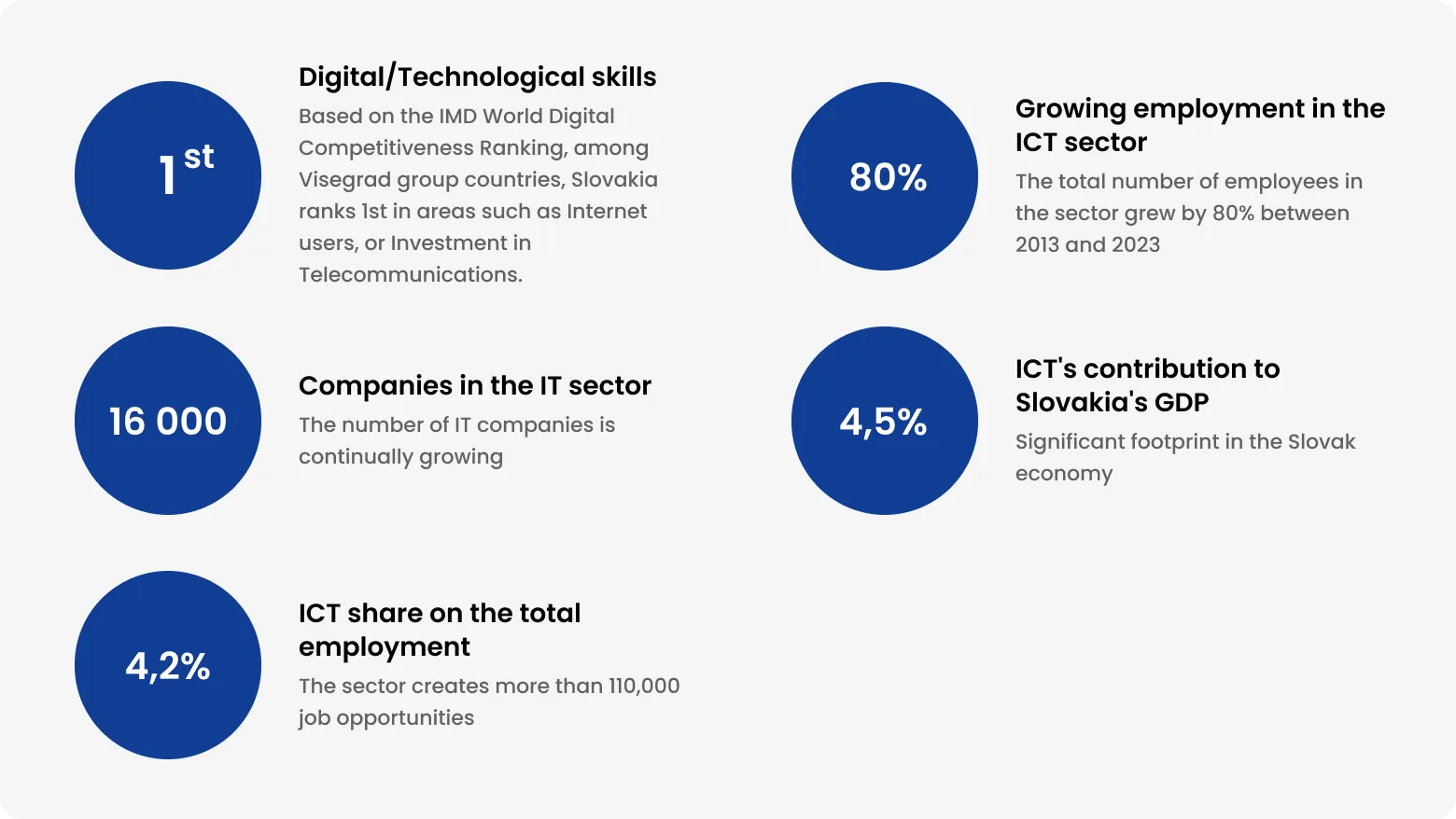
Several thousand new graduates enter the ICT workforce annually. Slovak University of Technology in Bratislava, Technical University of Kosice, Comenius University Bratislava, and University of Žilina are the most prominent higher educational institutions that offer advanced computer science and engineering programs, providing a steady flow of ICT graduates with a strong theoretical foundation and practical skills.
The specialization of local developers lines up with modern enterprise needs:
Backend-heavy systems: A particular focus on Java, .NET, and Python frameworks is common, especially in enterprise and legacy system integrations.
Fintech & banking: A few local and regional fintech players, alongside banking software groups, rely on Slovak engineers for backend services and secure transaction platforms.
Automotive & embedded systems: Slovakia is one of the world’s largest car producers per capita. In fact, 9 car brands of major auto groups like Volkswagen, Stellantis, KIA, Jaguar Land Rover, and Volvo are produced here. That industrial base goes hand-in-hand with embedded software and smart systems expertise.
Logistics & manufacturing tech: Because of Slovakia’s location in the center of Europe and strong manufacturing sectors, local developers are highly involved in logistics optimization, IoT, and process automation projects.
Broadness and scalability aren’t the strengths of the Slovak talent pool. Yet, the country compensates for it with quality and niche expertise. You won’t find developers in vast numbers here. Instead, you get a concentrated group of university-educated, well-trained engineers who are exceptionally strong in their domains.
Time zone alignment and language skills as key collaboration aspects
Successful collaboration with an outsourcing vendor depends not only on the tech skills of the team but also on time zone alignment and clear communication. Slovakia wins in both categories.
The country operates in the CET time zone, which puts it in a very favorable position.
If you’re in the EU, you’re on the same schedule as your Slovak team. And even for the UK, it’s just a one-hour difference. As a result, all working activities – daily stand-ups, sprint planning, last-minute clarifications, etc. – fit into a normal workday without anyone having to stretch their hours. This is one of the factors that make European companies consider Slovakia for nearshore development.
For the US-based companies, the setup is workable too. There are 3-4 working hours of overlap with the East Coast. This means that your morning aligns with the Slovak team’s afternoon. So, collective meetups and Scrum ceremonies can happen without any friction. For the West Coast, collaboration is mostly async but still manageable when communication is structured. Slovak teams are used to this setup and adapt their schedules to ensure comfortable collaboration for both sides.
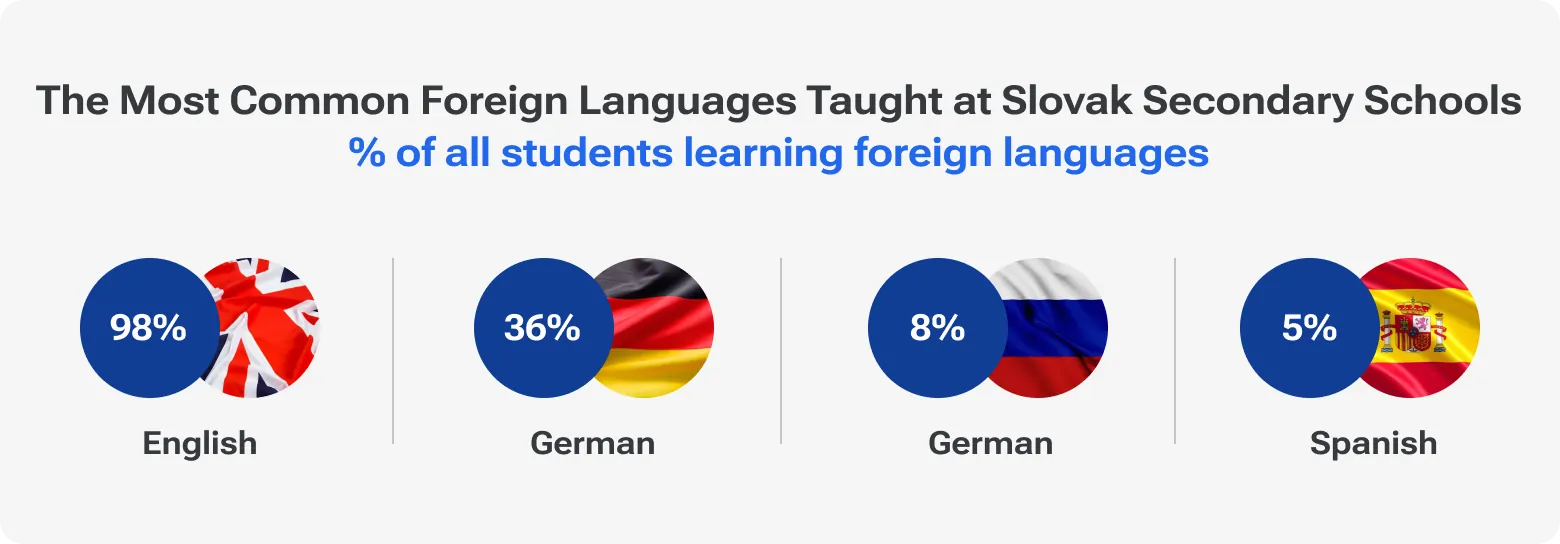
Language is rarely an issue. 86% of Slovaks speak at least one other language besides their mother tongue. Students learn foreign languages already at primary school and continue these studies at higher levels.
English proficiency in Slovakia is high, especially in the tech community. The communication is clear, concise, and professional, which is exactly what is needed when projects get intense or timelines shrink.
Time zone convenience and good English command in Slovakia remove a lot of collaboration hiccups that companies often worry about when outsourcing.
Outsourcing models that Slovak vendors offer
Engagement models define how your team collaborates, who manages day-to-day tasks, and how much control and flexibility you have. Picking the wrong approach can slow delivery and add unnecessary costs. Luckily, Slovak outsourcing companies offer a few options to cover different needs.
1. Staff augmentation
This model lets you add skilled developers directly to your existing team. They work, using your processes, tools, and workflows, and report to your management. Staff augmentation is a good option when you want to handle specialized tasks or scale quickly without hiring full-time locally. It’s flexible and keeps control in your court.
Key features:
Bringing in individual developers to integrate into your existing team
Maintaining full control over workflows and processes
Ideal for long-term collaboration or scaling up particular capabilities
2. Dedicated development teams
In this case, your vendor provides a dedicated team – developers, QA engineers, DevOps, and sometimes a project lead – that works full-time on your product. In fact, it’s like establishing an in-house team without the administrative headache. You still guide the project, but day-to-day coordination is shared. This model works well when you need continuity and a team fully committed to your product.
Key features:
A full, vendor-managed team working on your project
Shared or coordinated project management
Best for product growth, parallel development streams, or complex initiatives
3. Managed project delivery
Here, your vendor handles almost everything: planning, development, QA, and delivery. You define the goals and share your vision, and the team implements it. This approach is perfect for companies without internal engineering leadership or those testing a new product concept. It can save a lot of time and eliminate stress but requires confidence in the vendor.
Key features:
Full responsibility for project implementation is with the vendor
Covers planning, development, QA, and project management
Works for hands-off oversight or testing new concepts quickly
Hire software developers in Slovakia
Legal, compliance, and data security considerations
Legal and compliance concerns can make outsourcing feel a bit risky, but Slovakia removes any uncertainty.
As you know, the country is an EU and Eurozone member, which lets you operate within a familiar and highly regulated legal environment. Contracts, financial transactions, and business processes follow well-established EU standards. This is a huge relief for companies that don’t want to deal with legal issues spontaneously.
Solid data protection is taken seriously here, too – Slovakia follows GDPR to the letter. So, if your business is already GDPR-compliant, you won’t need to revamp your privacy or data handling frameworks. Slovak vendors have strict internal security processes, and working with European and American clients is routine for them.
Intellectual property is also well-protected in Slovakia. Local law fully supports IP ownership transfer, so your code, product, and documentation stay yours. No loopholes or vague wording, because EU standards apply here as well.
Cross-border contracting is rather simple. EU-based companies can usually work with Slovak vendors with minimal administrative friction, while non-EU companies benefit from clear contract structures and agreements commonly used across the industry. They usually include warranties, an IP right transfer, indemnities, and standard non-compete and non-solicit clauses.
Finally, we’d like to make a quick note on taxes. VAT rules may apply, based on where your company is registered and how the services are invoiced. For EU businesses with valid VAT numbers, reverse-charge mechanisms normally apply. Non-EU clients are usually exempt.
Overall, Slovakia offers a legally safe and controlled environment, which is so important when outsourcing something as critical as software development.
Risks and challenges of Slovakia software development outsourcing
Undeniably, Slovakia has a lot going for it, but like any market, it comes with its own trade-offs, which you’d better know in advance.
1. Small talent pool
The number of software developers in Slovakia is much smaller than in other countries in the region. It doesn’t affect small or mid-sized teams in any way, but if you’re planning a big hiring push – let’s say, 30-40 engineers at once – it will not be quick or straightforward. Fast, large ramp-ups are pretty challenging.
For the same reason, you hardly find large, enterprise-scale outsourcing companies here. Most Slovak vendors are boutique or mid-sized. That works well for teams that value close collaboration and flexibility, but if you’re looking for a 1,000+ headcount provider, Slovakia isn’t the best variant.
2. Cost difference
Though Slovakia is much cheaper than Western Europe, it’s not the most budget-friendly option compared to Eastern Europe. Countries like Romania, Bulgaria, and Ukraine offer lower rates. By outsourcing to Slovakia, you usually pay a bit more for stability, high professional standards, and reliability.
3. Competition for senior developers
Senior engineers are in high demand everywhere, and Slovakia is no exception. Developers with solid backend skills, cloud experience, or deep domain knowledge rarely sit on the bench for long. The best people get snapped up very quickly. As a result, hiring top-level talent for a particular role can take time, and in some cases, you may find yourself waiting for the right expert to become available.
How to reduce the risks
With the right approach, you can handle most challenges. Here are a few tips for you:
Opt for established vendors like Devico that have stable teams and recruitment pipelines, not those building everything from scratch.
Plan hiring timelines realistically, especially for senior roles.
Where possible, be flexible with team composition and stack.
Choose partners that combine local expertise with proven delivery processes and experience working with international clients.
How to choose the right vendor in Slovakia
Once you’ve decided Slovakia is the right place to outsource for you, the next part comes – picking a reliable vendor who can be your right-hand partner.
Here are a few aspects to keep in mind to make a smart choice:
1. Technical specialization
Don’t take a long tech list on a website for granted. Ask what the team has actually built. Make sure the technologies you need have been used in real projects, not just demos.
2. Domain experience
Fintech, automotive, logistics, healthcare – every industry has its particularities. Teams that already know the rules, risks, and regulations will move faster and make fewer mistakes.
3. Communication style
This one shows up fast. If kickoff calls are clear, structured, and to the point, that’s a good sign. Good English, clear answers, and the ability to explain technical decisions are baseline requirements. If you have to rephrase questions three times, that’s a red flag.
4. Team seniority balance
A good mix of senior, mid-level, and junior engineers usually delivers the best results. Too many juniors slow things down, while too many seniors can burn your budget. Your potential partner should be able to offer the happy medium.
5. Delivery process and QA maturity
Don’t forget to ask a potential partner how work is planned, tracked, and tested. Top vendors have well-defined delivery processes and take quality assurance seriously, not as an afterthought.
6. Security and compliance
It cannot be too often repeated that security is the key priority. Look for outsourcing companies that know GDPR requirements inside out and have standard security practices in place. Certifications are an advantage, but they aren’t always mandatory.
7. Case studies and references
Real stories are better than glossy presentation slides. Case studies show the capabilities of the team, and references prove the vendor can deliver when things get stressful.
Choosing the right outsourcing partner isn’t about picking the biggest name but about finding a team that fits your goals and works the way you do.
On that note, Devico is worth mentioning. With over a decade in the market, the company operates across several Central and Eastern European countries.
Closing remarks – Should you outsource to Slovakia?
Slovakia is a great country that has the potential to grow and offer more in the upcoming years. Is it perfect? Not at all, just like neither of the other outsourcing countries. It comes with its own pros and cons, and to understand if you should outsource to a local vendor, you need to clearly understand your needs and perspectives.
Hire developers in Slovakia if you prioritize:
EU-level standards and stability
High-quality backend engineering
Strong fintech or embedded expertise
Reliable collaboration and delivery
Consider other destinations if:
You need to hire 15–30 devs quickly
Your budget is your primary constraint
You look for a really large vendor ecosystem
In case Slovakia is actually the best option for you, Devico can help you assemble a local development team as well as a team in Poland or Romania, if you need a bigger scale. Let us know your pain points and requirements, and we’ll match you with the experts who can get the job done well.
Great software starts with great people