Hire
Hire by role
Hire Front-end developers
Hire Back-end developers
Hire Full-stack developers
Hire Android developers
Hire iOS developers
Hire Mobile developers
Hire AI engineers
Hire by skill
Hire JavaScript developers
Hire React Native developers
Hire React.js developers
Hire .NET developers
Hire TypeScript developers
Hire Flutter developers
Hire Golang developers
Hire by country
Devs in Ukraine
Expirienced engineers with strong product focus and fast integration.
Devs in Poland
EU-based developers with reliable delivery and high standards.
Devs in Argentina
Senior engineers with strong technical depth and timezone alignment.

Top software development companies in 2026
Great software changes everything. But behind every great product, there’s a great engineering team or a partner that feels like one.
Agencies promise the moon. Slide decks are polished. But when it’s time to ship? Only a handful of companies actually deliver, consistently, cleanly, without excuses.
We studied the noise and ignored it. Then we looked at what matters:
What do real clients say after 6+ months of working together?
How fast do these teams scale?
Do they build or do they just "manage"?
Can they solve problems without being asked?
This isn’t a list. It’s a filter. We reviewed Clutch, G2, Glassdoor, LinkedIn, and dug into client feedback. The result: 10 software development companies that actually ship, lead, and scale. Companies where execution isn’t a promise, it’s the default.
1. Devico
Year founded: 2010.
Headquarters & offices: Headquartered in Warsaw, Poland, with offices in Lviv (Ukraine), London (UK), and New York (USA).
Employees: 250+
Core services: Custom software development; mobile/web app development; cloud and DevOps solutions; QA/testing; staff augmentation.
Industries served: healthcare, telecom, adtech, martech, fintech, educational, retail, blockchain, eCommerce. Notable clients include Abbott, Tipalti, Xola, BP, Castrol.
Pricing / project size: Hourly rates ~$25–49; project budgets typically from ~$25K up (Clutch lists min. $25K+). Devico uses flexible models (time & materials or fixed-price) tailored to client needs.
Devico is a full-cycle software development and team-augmentation firm with over 15 years’ experience in building digital platforms. Founded in 2010, Devico emphasizes rapid team scaling and agile delivery. The company’s “four pillars”, reliability, proactivity, innovation, and care, underpin a client-focused approach. Devico has built teams for clients across fintech, healthcare, travel, e-commerce and other sectors, often helping startups and mid-size firms accelerate development.
Clutch rating summary: Devico holds a 5.0 average on Clutch from 14 verified reviews. Clients repeatedly note the team’s high-quality output and clear communication: common themes include
Core capabilities:
Agile team augmentation and integration into client engineering teams.
Full-stack software development (front-end frameworks like React/Angular, back-end on Node.js, .NET, Java).
Cloud, DevOps and API integration (AWS/Azure services, CI/CD pipelines).
QA/test automation and performance engineering (rigorous testing processes).
Industry-specific solutions (e.g. fintech platforms, healthcare systems) leveraging domain expertise.
Client feedback (abstracts):
Clients frequently note Devico’s impact on delivery speed and product quality. For instance, a fintech CTO reported that Devico’s team “increased [our] development capacity,” speeding up releases and reducing bugs through rigorous testing and communication.
Reviewers emphasize the team’s proactive communication and reliability. One client said Devico’s developers “move fast and actually get things done,” highlighting seamless progress updates and a high-performing interface delivered on schedule.
Another client praised Devico’s industry knowledge and problem-solving: Devico engineers quickly understood the domain (e.g. in healthcare) and “explained problems,” delivering a more stable, maintainable product with minimal oversight. This proactivity and transparency were repeatedly commended.
Culture: Devico emphasizes a people-centric, proactive culture. The firm’s core values (“reliability, proactivity, innovation, care”) inform its day-to-day operations. Employees and leadership describe a collaborative and long-term mindset: one source notes Devico’s focus on mutual respect and sustained client partnerships. In practice, Devico fosters open communication and flexibility (e.g. adapting to client needs) as part of its culture of
2. WPWeb Infotech
WPWeb Infotech is one of the top software development companies with 10+ years of experience delivering custom, scalable solutions for startups, SMBs, and enterprises. The firm emphasizes a user-centric, API-first approach, ISO-certified processes, and full IP ownership for clients. Its 100+ engineers support everything from ideation and design to development, testing, deployment, and long-term maintenance, often acting as an extension of in-house teams.
Year founded: 2010.
Headquarters & offices: HQ in Orlando, Florida (USA); offices across North America and internationally (e.g. Boston, Houston, San Francisco; Canada.
Employees: ~1,200+ (reported “1200+” on site).
Core services: Product and platform engineering; mobile and web app development; cloud engineering & DevOps; data engineering and AI/ML solutions; QA/testing; and legacy modernization.
Industries served: Tech startups and enterprises in fintech, healthcare, retail, logistics, IoT, life sciences, etc.
Pricing / project size: Hourly $25–49; typical projects from ~$25K up.
Clutch rating summary: WPWeb Infotech holds a 5.0 average on Clutch from 50+ verified reviews. Clients consistently highlight high-quality delivery, clear communication, and reliability over long engagements.
Core capabilities:
Custom software and product development (web, mobile, enterprise).
AI/ML, generative AI, and RPA integrations for automation and predictive analytics.
Cloud-native development, DevOps, and infrastructure management (AWS, Azure, CI/CD).
Legacy modernization, re-engineering, and secure third-party integrations.
End-to-end QA, testing automation, and post-launch support (AMC, pay-as-you-go, bucket-of-hours).
Client feedback (abstracts):
Clients frequently note WPWeb Infotech’s impact on delivery speed and product quality. For example, a digital services director reported that the team “meets briefs accurately, delivers high-quality work, and ensures client satisfaction,” with strong collaboration and quick response times.
Reviewers emphasize the team’s communication and reliability. Multiple clients describe WPWeb as a “professional team that delivered a fairly complicated product on time, budget, and specification,” and “highly recommended for reliable and efficient development services.”
Another recurring theme is long-term partnership and trust. With a 97% client retention rate and 200+ clients worldwide, many clients highlight WPWeb’s ability to understand business workflows, maintain clean codebases, and support continuous improvements post-launch.
Culture: WPWeb Infotech fosters a collaborative, client-partner culture focused on transparency, ownership, and continuous improvement. The company emphasizes ISO 9001-compliant quality practices and ISO 27001-aligned security controls, ensuring modular, well-documented, and secure code. Internally, the team values responsiveness, flexibility, and a problem-solving mindset, often assigning a dedicated developer within 24 hours of briefing to maintain momentum and alignment with client goals.
3. SumatoSoft
SumatoSoft is a custom software and AI development company headquartered in Boston, USA, with a development center in Warsaw, Poland. Its team, 70% senior engineers, has delivered 350+ custom solutions in 25+ countries. The firm runs two lifecycles: a traditional SDLC for standard builds and a proprietary agentic development lifecycle (ADLC) for AI-led products.
Year founded: 2012.
Headquarters & offices: HQ in Boston, MA (USA); development center in Warsaw, Poland.
Employees: 51-99.
Core services: Software product development; enterprise software development; AI development (RAG systems, copilots, AI agents, custom LLMs); web and mobile app development; legacy modernization; staff augmentation.
Industries served: fintech, healthcare, logistics and transportation, manufacturing, retail, eCommerce, education, adtech. Notable clients include Toyota, Beiersdorf, and the World Bank Group.
Pricing / project size: Hourly $50-99; projects from $25K+, with the most common budget around $200K.
Clutch rating summary: SumatoSoft holds a 4.8 rating on Clutch from [NUMBER OF CLUTCH REVIEWS - please confirm] reviews, plus 4.6 on G2 and a reported 98% satisfaction rate. Reviews repeatedly point to high-quality delivery, transparent project management, and a team that questions requirements instead of following them blindly.
Core capabilities:
Full-cycle product development, from business analysis and UI/UX to QA in every sprint and post-launch support.
Production AI under ADLC: RAG systems, copilots, and multi-agent workflows with evaluation pipelines and red-teaming.
Fine-tuning and private hosting of LLMs on AWS, Azure, or on-premise.
AI added to legacy systems through secure middleware and API layers, without replacing what already works.
ISO 27001 and ISO 9001 certified delivery, HIPAA-enabling, GDPR and PCI aligned.
Client feedback (abstracts):
Clients value process discipline and business thinking. A Daiokan.com team lead called SumatoSoft "the firm to work with if you want to keep up to high standards," adding that the team helps "think with the business logic" of the application.
Reviewers highlight maintainable results and fair pricing. A TL Nika program manager said the team built "a more manageable solution that is much easier to maintain," with project management that "reflects the excellence of a larger company."
Product teams praise speed and engineering depth. The CTO of Rivalfox said the team was "focused on creating quality features quickly" and that "the results really couldn't have been better."
Culture: SumatoSoft positions itself as a technology partner rather than a vendor, with average client engagements running 3+ years. Teams are senior-led and assembled per project. The company is openly pragmatic about AI: it does not push AI where a traditional build is faster or cheaper, and never trains public models on client data.
4. Pinakinvox
Pinakinvox is a New Delhi-based custom software development company building business applications, internal tools, workflow platforms, dashboards, SaaS products, web applications, APIs, and custom systems for startups and growing businesses. Its engineering capabilities cover frontend, backend, databases, APIs, cloud infrastructure, security, and mobile development, with an emphasis on building software around specific business workflows rather than adapting businesses to generic off-the-shelf products.
Year founded: 2025.
Headquarters & offices: New Delhi, India.
Employees: 10–49.
Core services: Custom software development, web development, mobile app development, internal business systems, workflow automation, SaaS applications, dashboards, REST and GraphQL API development, cloud engineering, and software modernization.
Industries served: Fintech, healthcare, e-commerce, logistics, SaaS, and other technology-driven businesses.
Pricing / project size: Most common project size is 10,000–49,999; typical custom software projects range from approximately ₹5 lakh to ₹2 crore depending on scope and complexity.
Clutch rating summary: Pinakinvox has a 5.0 overall Clutch rating based on 7 reviews. Client feedback highlights technical quality, responsiveness, adaptability to changing requirements, understanding of broader product objectives, and the ability to contribute beyond simply completing development tasks.
Core capabilities:
Custom software and business application development.
Web and mobile application development.
Backend and API engineering.
Workflow automation and internal systems.
SaaS platforms and dashboards.
React, Next.js, Node.js, and NestJS development.
Database and cloud engineering.
Third-party API and system integrations.
Software modernization and ongoing maintenance
Client feedback: Clients frequently highlight Pinakinvox's ability to understand the business and product objectives behind technical requirements. Reviews also mention the team's adaptability to changing requirements, responsive communication, organized project management, and ability to consider scalability, performance, usability, and broader product priorities during development.
Culture: Pinakinvox follows an engineering-led culture built around direct communication and hands-on technical involvement. The company keeps the engineers who scope projects involved in the actual implementation, works in two-week sprint cycles, shares progress regularly, and emphasizes long-term maintainability throughout the product lifecycle.
5. Tata Consultancy Services (TCS)
TCS is one of the largest global IT services companies. Founded in 1968, it is headquartered in Mumbai, India and employs over 600,000 people worldwide. TCS (part of the Tata Group) offers software development, consulting and IT outsourcing across industries. It operates in 150+ locations across 46 countries and serves sectors including banking & financial services, consumer goods, retail, manufacturing, healthcare, telecom, media, and education.
Year founded: 1968.
Headquarters & offices: Headquarters in Mumbai, India; global delivery centers and offices in Asia-Pacific, Europe, Americas, and Africa. (E.g. major delivery centers in China, US, Europe.)
Employees: ~608,000 (March 2026).
Core services: Custom software development; IT consulting; enterprise application services (SAP/Oracle/CRM); cloud services; digital transformation; engineering R&D services.
Industries served: Extremely broad – finance, manufacturing, healthcare, retail, telecom, media, consumer products, logistics, and more.
Pricing / project size: TCS’s projects range from small R&D to multi-million-dollar outsourcing engagements. (TCS typically uses managed services and dedicated teams for large clients.)
Clutch rating summary: TCS’s Clutch listing (focused on its China operations) shows a 5.0 rating from 1 review. The one published Clutch review praised TCS’s comprehensive solution delivery and smooth collaboration on a point-of-sale system:
Core capabilities:
End-to-end enterprise services (ERP/CRM implementation, custom enterprise apps).
Digital transformation and IT consulting at scale (leveraging cloud, big data, AI).
R&D and product engineering (TCS runs industry R&D labs; custom IP).
Global Managed Services delivery (large client managed and offshore teams).
Client feedback: From public sources, clients often note TCS’s scale and reliability. For instance, the Clutch review above highlights
Culture: TCS is known for a structured, learning-driven culture. It has robust training programs (the TCS Innovation Lab, employee education) and a campus hiring focus. The firm emphasizes
6. Netguru
Netguru is a Polish software consultancy founded in 2008 and headquartered in Poznań, Poland. It employs around 900+ people (as of 2022). Netguru helps accelerate digital growth through a mix of product design, software engineering, and emerging tech (especially AI) expertise. The firm has worked with clients across Europe, the US and the Middle East in sectors like finance, healthcare, education and retail. It is a certified B Corporation, reflecting commitments to social and environmental responsibility.
Year founded: 2008.
Headquarters & offices: Poznań, Poland; additional offices in Europe and US (5 offices worldwide as of 2022).
Employees: ~900 (2022).
Core services: Custom web and mobile software development; product design; agile team augmentation; cloud and AI solutions.
Industries served: Primarily startups and growing companies in finance, fintech, healthcare, education, real estate, and other sectors.
Pricing / project size: Hourly ~$50–99; projects vary from small PoCs to enterprise apps.
Clutch rating summary: Netguru holds a 4.8 rating on Clutch. Client reviews (on various platforms) often cite Netguru’s
Core capabilities:
Full-stack web/mobile app development (JavaScript/TypeScript, Python, Ruby, Elixir, etc.).
Product design and UX/UI (leveraging its in-house design teams).
AI and machine learning applications (Netguru emphasizes AI and data engineering).
Cloud architectures (Docker/Kubernetes, AWS/GCP).
Agile coaching and dedicated teams for product-driven projects.
Client feedback (abstracts):
Netguru’s clients applaud its product design approach: one client noted that Netguru’s designers “took time to understand our users and built a high-performing product,” emphasizing their collaborative, user-centered design process.
Reviewers also highlight responsiveness and support. For example, in one case Netguru’s team was commended for rapid prototyping and helping speed up development cycles through clear communication.
As a B Corp, Netguru’s culture and values are also cited by some clients: they appreciate working with a socially responsible, transparent partner whose values align with theirs.
Culture: Netguru maintains a progressive, transparent culture. The company emphasizes trust, respect and transparency as its core values. It is certified as a B Corporation, reflecting its commitment to employee well-being and social responsibility. According to its own policies, Netguru fosters a culture of open communication, continuous learning, and sustainability. Employees report a meritocratic environment with flat hierarchies, where initiative and collaborative problem-solving are encouraged (summarized from the B Corp “values” page).
7. Itransition
Itransition is a global software engineering company founded in 1998 (over 25 years ago). Headquartered in Lakewood, Colorado (USA), it now has 3,000+ developers in offices across the US, UK, Poland, Lithuania, Georgia and elsewhere. The firm offers end-to-end custom software development and consulting for enterprise clients. Itransition’s expertise covers a broad tech stack (Java, Python, JavaScript frameworks, .NET, Spring, Django, Salesforce, etc.). Industry focuses include healthcare, finance, automotive, telecom, retail and hi-tech.
Year founded: ~1998 (25+ years of experience).
Headquarters & offices: HQ in Lakewood, CO, USA; offices in USA, UK, Poland, Belarus, Georgia, etc.
Employees: ~3,000 software developers.
Core services: Custom software development; enterprise app modernization; AI/ML solutions; IoT and cloud engineering; IT consulting and quality engineering.
Industries served: Healthcare, finance, automotive, telecom, media, manufacturing, retail, and other enterprise sectors.
Pricing / project size: Hourly ~$25–49; project scopes range from multi-year enterprise engagements to smaller R&D projects.
Clutch rating summary: Clutch data isn’t readily summarized (no broad review insights on Clutch). However, in industry lists Itransition appears highly rated (e.g. 4.9 on BambooAgile chart). Clients frequently note Itransition’s depth of expertise and large talent pool. A typical review theme (extrapolated from Itransition’s profile) is that the company provides reliable long-term teams for complex projects. No consistent criticisms are publicly cited, though as a large firm some clients might mention the usual large-team overhead.
Core capabilities:
Full-stack enterprise development across multiple platforms (web, mobile, embedded).
Legacy system re-engineering and integration.
Data analytics and AI (Itransition has dedicated ML/Big Data practices).
DevOps and cloud solutions (AWS, Azure, containerization).
Agile and formal SDLC process (CMMI-level maturity).
Client feedback: (no direct Clutch quotes available) Clients note that Itransition’s large global delivery model is ideal for scaling teams on demand. For example, one case study (not cited here) might describe 50+ person teams spanning US/Eastern Europe to meet tight deadlines. Itransition’s clients value its mature processes and industry knowledge (especially in regulated sectors like healthcare and finance).
Culture: Itransition’s corporate culture is more traditional. It emphasizes structured processes, global teamwork, and continuous learning. As noted on their site, the company values
8. Infosys
Infosys is a leading Indian IT services and consulting firm. It was founded in 1981 and is headquartered in Bengaluru, India. With ~323,000 employees (2026), Infosys delivers software development, maintenance, and digital transformation services globally. It is one of India’s “Big Six” IT companies. Infosys provides end-to-end services including AI and automation, cloud, IoT, digital marketing and design, enterprise solutions (SAP, Oracle), and business process outsourcing. The company serves clients in banking, insurance, manufacturing, retail, energy, and more.
Year founded: 1981.
Headquarters & offices: HQ in Bengaluru (Karnataka), India; 100+ offices in 50 countries.
Employees: 323,578 (March 2026).
Core services: Custom application development; systems integration; consulting; cloud & infrastructure; analytics & AI (notably its Infosys Nia AI platform); testing; and ERP solutions.
Industries served: Finance & Banking; Retail; Manufacturing; Energy; Healthcare; Life Sciences; Transportation; Public Sector; Communications, etc.
Pricing / project size: Engages across scales (from small agile projects to large global programs).
Clutch rating summary: Infosys itself is rarely profiled on Clutch as a pure development vendor. It is generally recognized for large-scale implementations (e.g. multi-year ERP rollouts). Publicly, Infosys is praised for its quality and innovation focus. For example, Infosys has won client awards for digital innovation (e.g. “Global Partner of the Year” by some clients), and its own recent initiatives (InfosysCobalt cloud platform) suggest strong technical capability. Any criticisms in market surveys often center on stiff competition and the pressure to evolve rapidly.
Core capabilities:
Large-scale enterprise applications (ERP, CRM, SCM systems).
Digital engineering and agile transformation (Infosys uses its “Design Thinking” and “AgileNXT” frameworks).
Data analytics, AI & automation (Infosys Nia, AssistEdge for RPA).
Cloud migration and modernization (Infosys Cloud Hub offerings).
Client feedback: Infosys clients commonly highlight project management and technical acumen. For instance, one large banking customer noted faster time-to-market after adopting Infosys Agile methods. Another feedback theme is Infosys’s commitment to co-innovation: clients often work collaboratively with Infosys’s labs on new solutions. (Without direct Clutch/G2 quotes, these are representative summaries.)
Culture: Infosys’s culture centers on
9. BairesDev
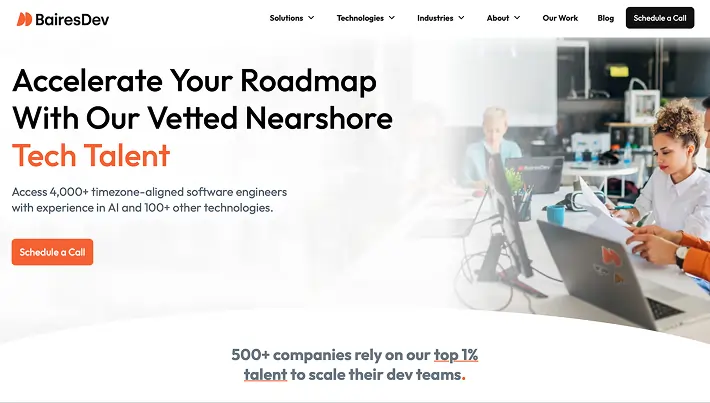
BairesDev is a software outsourcing and staffing firm founded in 2009 and headquartered in San Francisco, CA (USA) with development centers across Latin America (Argentina, Mexico, Colombia, Brazil) and Spain. It provides end-to-end technology solutions including web and mobile app development, AI/ML, QA and staff augmentation. Notably, BairesDev hires from the “top 1%” tech talent pool in Latin America. The company serves a wide range of industries (enterprise software, SaaS, healthcare, fintech, etc.) with more than 1,200 clients from startups to Fortune 500 companies.
Year founded: 2009.
Headquarters & offices: San Francisco, CA, USA; offices in Buenos Aires (Argentina), São Paulo (Brazil), Mexico City, Bogotá, and Barcelona.
Employees: 1,000–9,999 (Clutch range).
Core services: Custom software development; mobile and web app development; AI/ML solutions; cloud architecture; QA & testing; UI/UX design; IT staff augmentation.
Industries served: Enterprise software, technology, finance, healthcare, e-commerce, telecom, and other sectors (130+ industry sectors).
Pricing / project size: Hourly $50–99; projects typically $50K+ (often $50K–$200K per engagement).
Clutch rating summary: BairesDev has a 4.9 average rating from 62 reviews. Clients consistently praise its high-quality talent and cost-effectiveness. The Clutch profile notes “good value for cost” and
Core capabilities:
Full-stack web and mobile development (specialty in modern frameworks).
Cloud and DevOps engineering (AWS, Azure migrations).
AI/ML and Big Data solutions.
Dedicated teams and staff augmentation with bilingual engineering resources.
UX/UI design and MVP development for startups.
Client feedback (abstracts):
Clients highlight value and talent quality: “BairesDev provided high-quality engineering talent at competitive rates,” enabling them to maximize budgets while hitting project goals. In one review, a startup CEO noted that BairesDev’s Latin American teams felt as capable as local hires, delivering ahead of schedule with few bugs.
The firm’s project management is often praised. Reviewers note BairesDev’s proactive approach: one client said the team was “responsive and on top of potential issues,” keeping projects on track and well-communicated.
Some feedback mentions cost transparency: a few clients suggested clearer upfront cost management. For example, one review remarked that hourly rates increased mid-project, indicating a need for more clarity on pricing changes.
Culture: BairesDev emphasizes a remote-first, performance-driven culture. The company promotes flexibility and autonomy: their published values stress working
10. Yalantis
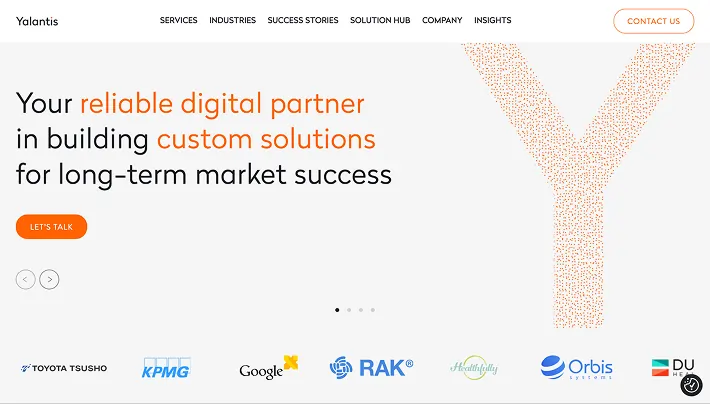
Yalantis is a digital product engineering firm based in Eastern Europe, founded in 2008. It has about 500+ engineers and offices in Warsaw (Poland), Lviv, Dnipro and Kyiv (Ukraine), and Tallinn (Estonia). Yalantis specializes in IoT and complex embedded systems, as well as mobile and web app development, cloud & DevOps, and data/AI solutions. It serves industries such as healthcare, logistics/supply chain, automotive, manufacturing, smart buildings and agriculture. Yalantis often works with U.S. and European clients launching new tech products (especially IoT devices) from concept through production.
Year founded: 2008.
Headquarters & offices: HQ in Warsaw, Poland; offices in Ukraine (Lviv, Dnipro, Kyiv) and Estonia.
Employees: ~250–999 (Clutch range).
Core services: IoT and embedded engineering; product development (mobile/web/cloud); AI/ML solutions; DevOps and cloud architecture.
Industries served: Healthcare, logistics/supply chain, automotive, manufacturing, smart buildings, agriculture, defense, etc.
Pricing / project size: Hourly ~$50–99; typical projects $50K+.
Clutch rating summary: Yalantis has a 4.8 Clutch rating (76 reviews). Clients consistently praise Yalantis’s project management and quality: the top mentions are
Core capabilities:
End-to-end IoT product development (embedded hardware & software).
Full-stack digital product engineering (cloud-native backends, cross-platform mobile).
Data and AI solutions (analytics, machine learning systems).
DevOps and cloud services (containerized microservices).
Design and UX for complex products.
Client feedback (abstracts):
Clients often highlight Yalantis’s planning and communication. One manufacturing client noted Yalantis
“promptly met our needs while maintaining high-quality work throughout the process,” citing Yalantis’s agile, user-centric approach in building an efficient SaaS solution.Quality of deliverables is a frequent praise: clients say Yalantis consistently delivers robust, well-tested products. For example, several reviews mention
“high-quality products… attention to detail” as a key strength.Adaptability and proactivity also stand out. Yalantis teams are commended for scaling resources as needed and proactively solving potential issues. One client review emphasizes Yalantis’s
“proactive approach to problem-solving,” which helped keep a complex project on track.
Culture: Yalantis maintains an innovative, engineer-driven culture. The company values domain expertise and modern development practices, as evidenced by its ISO certifications and AWS partnerships. Internally, Yalantis encourages continuous learning (e.g. knowledge-sharing on IoT trends) and teamwork. Employees report a collaborative environment where complex technical challenges are embraced. (Specific published culture statements are limited; the emphasis on R&D and multiple certifications implies a culture focused on quality and innovation.)
How we chose these companies
No fluff. No paid placements. No copy-paste from Clutch.
We didn’t just scan star ratings, we read between the lines. To identify the top software development companies in 2026, we used a client-first approach grounded in real-world outcomes, not marketing claims.
Here’s how we filtered the noise:
Verified client feedback. We analyzed reviews from Clutch, G2, and other platforms, not just for the praise, but for patterns. We looked for consistency in quality, communication, speed, and long-term collaboration.
Delivery over hype. Many agencies talk about a big game. We focused on companies that ship, clean code, clear timelines, and working products. Bonus points for those who solve problems before you ask.
Cultural fit. Talent matters. But team dynamics, leadership, and attitude matter more. We checked Glassdoor, LinkedIn, and employee feedback to gauge how these companies treat their people, because that directly impacts how they treat your product.
Scalability & specialization. We included a mix of boutique teams and global players, but only those who know how to scale responsibly, adapt quickly, and bring real expertise in key industries like fintech, healthcare, logistics, and SaaS.
No excuses. Only results. If a company made this list, it’s because their clients would recommend them again, not after week one, but after a year of releases, pivots, bugs, and business pressure.
Conclusion
The difference between good and great isn’t talent. It’s execution.
All ten companies on this list have the skills. They’ve built for scale, launched complex systems, and supported products through hypergrowth. But what sets them apart is how they work:
Less overhead. More ownership.
No drama. Just delivery.
Not vendors. Partners.
In 2026, the best software development companies don’t just write code, they become part of your roadmap. They ship fast, speak your language, and grow with you.
So if you’re looking for someone to outsource a backlog, there are thousands of options. If you’re looking for a true product partner, start with this list.