Staff augmentationSep 23, 2026
Upskill, hire, or augment? Building teams in the AI era
Master how to build an engineering team in the AI era by blending upskilling, hiring, and augmentation instead of defaulting to one option.
Hire
Hire by role
Hire Front-end developers
Hire Back-end developers
Hire Full-stack developers
Hire Android developers
Hire iOS developers
Hire Mobile developers
Hire AI engineers
Hire by skill
Hire JavaScript developers
Hire React Native developers
Hire React.js developers
Hire .NET developers
Hire TypeScript developers
Hire Flutter developers
Hire Golang developers
Hire by country
Devs in Ukraine
Expirienced engineers with strong product focus and fast integration.
Devs in Poland
EU-based developers with reliable delivery and high standards.
Devs in Argentina
Senior engineers with strong technical depth and timezone alignment.

Summarize with:

Leave your email and we will inform you about all our news and updates
Staff augmentation is now the default way engineering teams add capacity without adding headcount. It is fast, it is flexible, and it is the reason a four-person startup can ship like a twelve-person team. It also comes with a predictable set of problems that show up in almost every engagement, usually in the first two months.
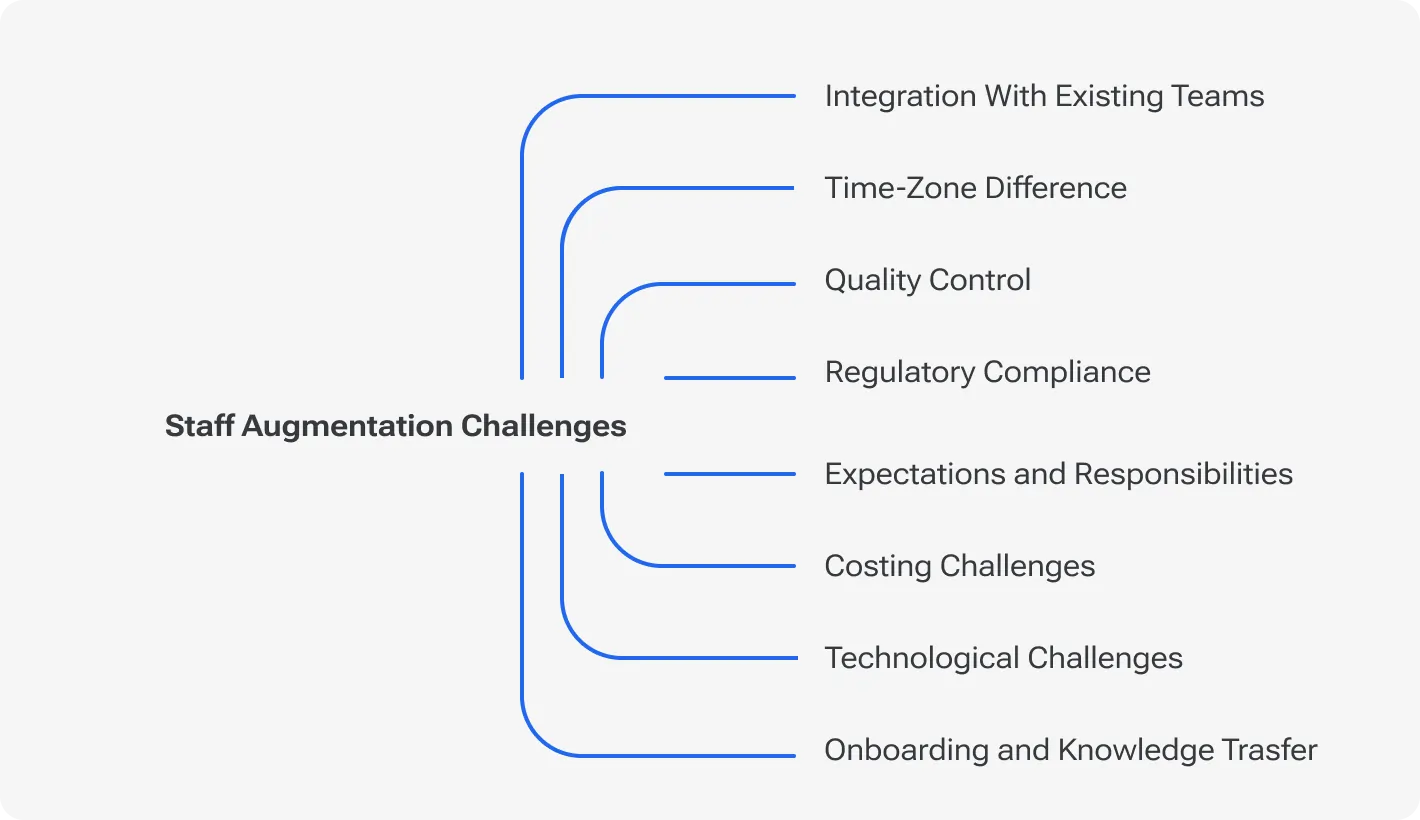
None of the eight challenges below is a reason to avoid the model. Each one is a management task that most teams have not done before, because managing people who are employed elsewhere, often in another country, is a different skill from managing a co-located team. This article covers what each challenge looks like, how to fix it, and what the week-to-week routine of managing an augmented team should be.
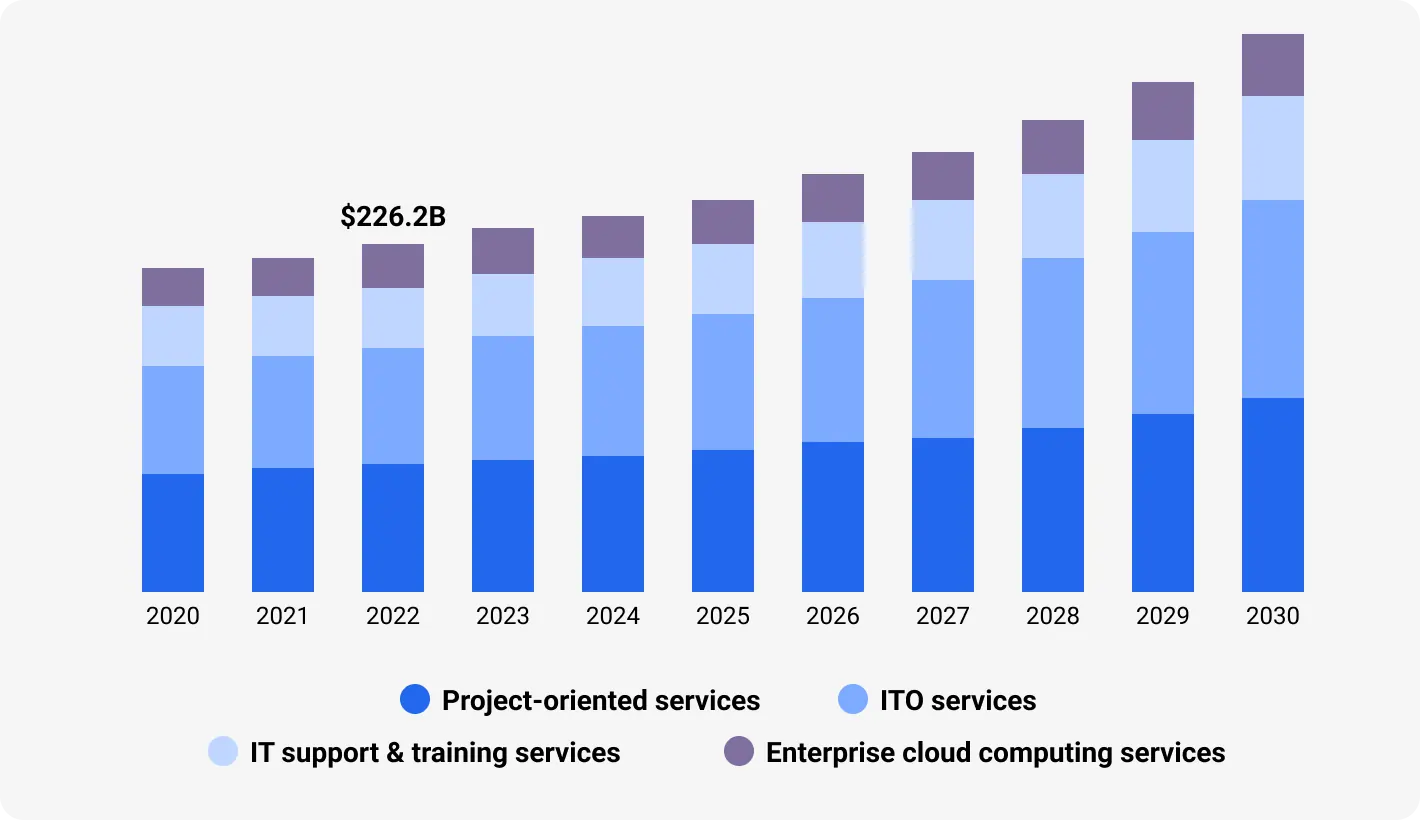
The context matters: in ManpowerGroup's 2026 Talent Shortage survey, 72% of employers across 41 countries report difficulty filling roles, and AI skills top the shortage list for the first time. More teams will augment in 2026 than ever before, and more of them will meet these eight challenges. If you are new to the model, start with what staff augmentation is and how it works; if you want to see how a vendor should handle its side of each challenge, our IT staff augmentation services page lists what we commit to.
The most common failure is not technical. An established team has habits, unspoken rules, and a shared history. New engineers who arrive from outside the company, often from a different culture and working remotely, can stay outsiders for months if nobody does the integration work.
It shows up in two ways.
Cross-cultural friction: different norms around directness, deadlines, and asking for help. An engineer who was taught not to interrupt a senior will not flag a blocker in standup.
Communication breakdown: assumptions about goals that were never written down, accents on calls, messages that read as curt. Gallup's State of the Global Workplace data, reported by ThinkBusiness, found remote workers are actually more engaged than on-site colleagues (31% versus 23%), so the problem is not remoteness. It is whether anyone built the bridge.
How to fix it. Treat augmented engineers as new hires, not as a vendor. Same onboarding, same standups, same retros, a buddy from the in-house team, and an explicit conversation in week one about how your team communicates: how to raise a blocker, how to disagree, when to use chat versus a call. We laid out the full 30/60/90-day plan in how to integrate augmented developers into your in-house team.
Your team is winding down when the augmented engineers sign on, or the reverse. Questions wait overnight, handovers happen in writing nobody reads, and a two-day task becomes a four-day task.
How to fix it. Decide the minimum overlap hours before choosing a region. A US East Coast team gets three to four hours with Central Europe and a full day with Latin America; a West Coast team gets one hour with Europe. Put the rituals that need real-time conversation (standup, planning, a guaranteed review window) inside the overlap and move everything else to writing. Rotate meeting times so the same people are not always on the late call. Keep a shared availability matrix so nobody has to calculate. The upside of the difference, a follow-the-sun cycle where code written in Europe is reviewed in the US the same day, is explained in how to make time-zone differences work for your business.
A distributed team makes quality harder to see. Code review slips, test coverage drifts, and the first sign of trouble is a release that breaks. DORA's 2025 research, summarized by InfoQ, found that 90% of technology professionals now use AI at work and that AI amplifies whatever process exists: teams with strong testing and review turn extra output into throughput, teams without them turn it into instability. Augmented engineers, many of them using AI tools, amplify the same way.
How to fix it. Written standards from day one: coding conventions, a definition of done, required test coverage, review rules. One review process for everyone, with in-house engineers reviewing augmented engineers' code and the reverse. Pair new engineers with a senior for the first month. Track defect rate against the team average from month two, not month one. The metric set is in staff augmentation metrics and KPIs.
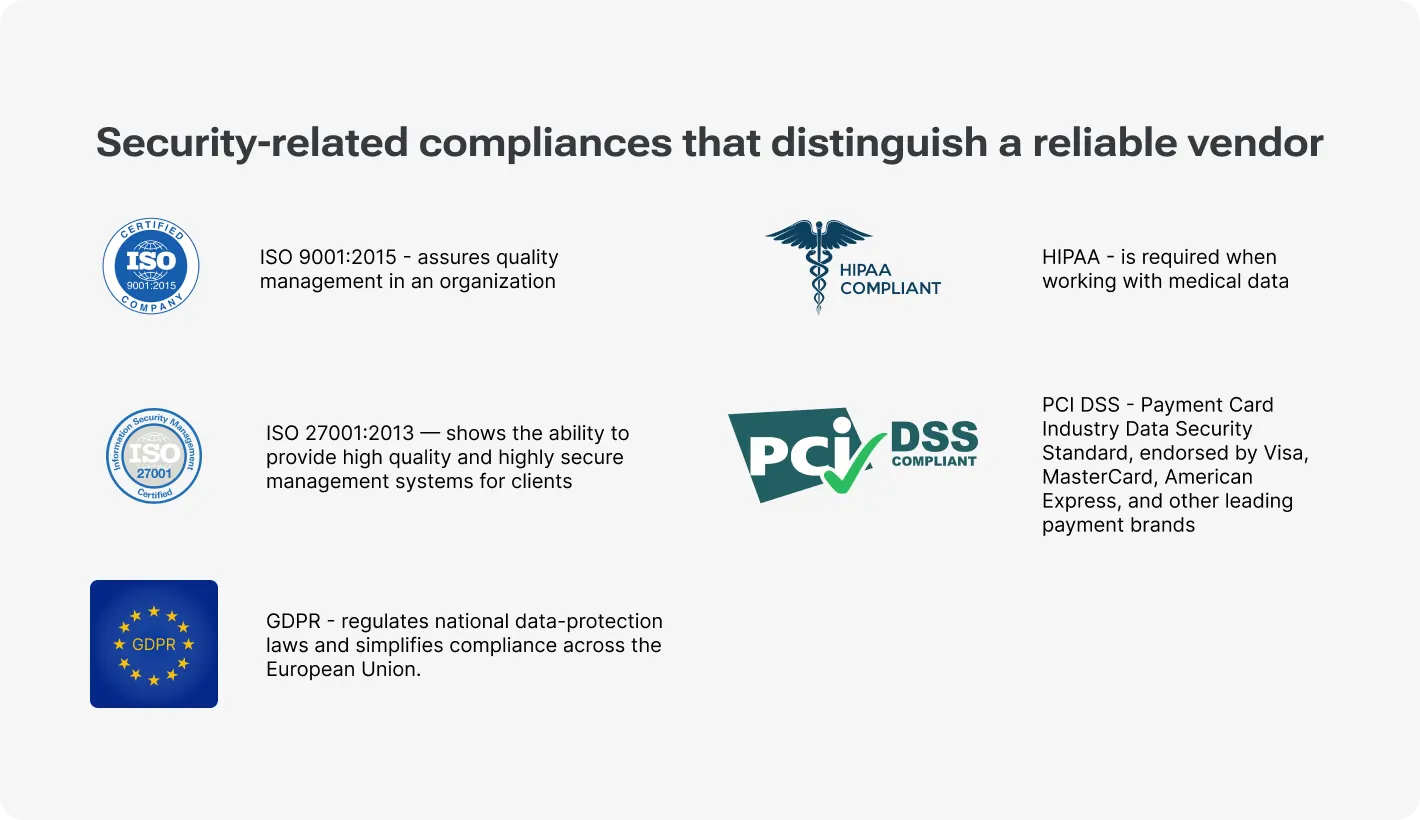
Engineers employed by a third party get access to your code, your data, and your infrastructure. Employment law, tax rules, and data-protection regulation in their country apply whether or not you thought about them. The cost of getting this wrong keeps rising. IBM's Cost of a Data Breach Report 2025 puts the average breach at $4.44 million, and breaches that begin with a third-party or supply chain compromise at $4.91 million. DLA Piper's GDPR fines survey for January 2026counts about €1.2 billion in fines issued in 2025 and a record 443 breach notifications a day across Europe.
How to fix it. Three layers. Contract: NDAs signed by each engineer that name your company, IP assignment in your contract with the vendor and in the vendor's contracts with engineers, and a data processing agreement where personal data is involved. Access: named accounts, least privilege, device policies, an offboarding checklist that revokes everything on the last day. Vendor: ask for certifications (ISO 27001, SOC 2) and for the legal entity that employs the engineers in each country. If you have already found engineers abroad and only need them employed compliantly, employer of record services handle contracts, payroll, and local law without the sourcing layer.
Roles overlap or stay vague. The augmented engineer thinks they own the feature; the in-house engineer thinks they are helping. Tasks get duplicated, or nobody does them. Priorities differ because the augmented engineers heard a different version of the goal.
How to fix it. Write down, per engineer, what they own, who they report to, and how their work is judged. Share the same roadmap and the same priorities with everyone, in the same meeting. When an augmented engineer is senior enough, give them real ownership of a module rather than a stream of tickets; task-doers without ownership need constant redirection, and that is a cost that lands on your lead. If your lead is already at capacity, read when to add a tech lead to your outstaffed team before adding more engineers.
Staff augmentation is usually cheaper than hiring, but costs climb in three ways: scope creep that adds hours nobody budgeted, a cheap rate that bought a junior-heavy team and now needs rework, and contract terms (renewal increases, billed handovers, equipment fees) that were not in the quote.
How to fix it. Compare vendors on total cost, not the hourly number. Ask for the rate itemized and fix renewal and notice terms in writing. Track hours against the plan monthly and treat a sustained overrun as a scope conversation, not a billing one. Prefer long-term engagements with a partner who has earned them; rates improve and re-onboarding costs disappear. The full cost model, including a twelve-month in-house comparison, is in staff augmentation cost in 2026.
Augmented engineers arrive used to different tools, different versions, different workflows. Access to your environment takes a week because nobody owned provisioning. Atlassian's 2025 State of Developer Experience report found that half of developers lose more than ten hours a week to organizational friction, much of it searching for information, services, and access. External engineers lose more, because they do not know whom to ask.
How to fix it. One toolchain for everyone, with access provisioned before day one: repository, CI, ticketing, documentation, chat, cloud environments. A written "how we work" page covering branching, environments, deployment, and where things live. A first ticket within 48 hours that forces the engineer through the whole pipeline once, with a buddy on call.
Onboarding is where most of the other challenges are either prevented or created. Incomplete documentation and an improvised first week produce an engineer who is still asking basic questions in month three. The mirror problem appears at the end: augmented engineers leave with knowledge nobody captured, and Ravio's 2025 data puts tech-industry turnover in Europe at 17.4%, so departures are not rare.
How to fix it. A structured 30/60/90-day plan: architecture walkthrough and environment on day one, small real tickets in week one, module ownership by day 60, full velocity by day 90. Documentation as part of the definition of done, so it stays current. Pairing on critical systems so no module has a single owner. An exit checklist written in month one. Our guide to keeping a project on track during turnover has the checklist.
Fixing the eight challenges once is not enough. They come back when attention drifts. The routine below is what keeps them fixed.
Daily. A standup inside the overlap window, with augmented and in-house engineers in the same call. A review window where pull requests are guaranteed a response the same day. Blockers raised in writing in one channel, not in direct messages.
Weekly. Planning from one backlog, with augmented engineers pulling tickets the same way everyone else does. A fifteen-minute check-in between your lead and each augmented engineer in the first two months, then biweekly. A look at review turnaround and tickets completed without clarification; both numbers tell you whether integration is working before velocity does.
Monthly. A call with the vendor's account manager: engineer satisfaction, any replacement risk, upcoming capacity changes. Hours against plan. Defect rate for augmented engineers' work compared with the team average, starting in month two.
Quarterly. A review of the engagement against the outcomes you wrote down at the start, not against hours. Knowledge-transfer check: which systems still have a single owner. Rotation of ownership where concentration has built up. A decision on scaling up, holding, or scaling down, made on evidence.
Rules that make the routine work. One backlog, no separate vendor task list. Decisions in writing. Augmented engineers in every meeting the in-house team attends, including retros. Feedback to the vendor early, in week two rather than month four. The eight working frameworks for distributed teams, from async-first communication to quality gates, are in productivity frameworks for distributed augmented teams, and the full operating playbook is in IT staff augmentation best practices.
Six of the eight challenges are owned by you rather than the vendor. That is the honest shape of staff augmentation: the partner carries employment, sourcing, and continuity; you carry integration. The deeper risks behind these challenges, from skill mismatch to vendor failure, each with its early warning signal, are in staff augmentation risks and how to mitigate them.
A good vendor removes the challenges it can and makes yours smaller.
Example. Sway, a US logistics startup, started with a few Devico engineers in 2020 and grew the engagement to seven people across architecture, back-end, mobile, design, and QA. The team works in Sway's process and tools, which is why six years in there is no separate "vendor team," just the team. How to screen any vendor for the same qualities is in how to choose an IT staff augmentation company.
The eight challenges of IT staff augmentation are integration, time zones, quality, compliance, expectations, cost, tooling, and onboarding. Every one of them is visible within the first sixty days and every one of them is fixed by treating augmented engineers as members of your team: same onboarding, same process, same meetings, same standards, with the vendor carrying employment and continuity in writing.
If you are scaling a team and want a partner who removes its half of the list by default, send us the role. You will have a shortlist within days and the contract terms alongside it.
Integration with the existing team, time-zone differences, quality control, regulatory compliance and security, unclear expectations, cost control, tooling mismatch, and onboarding and knowledge transfer. Most appear within the first two months and most are owned by the client rather than the vendor.
Run one backlog and one process for everyone, hold standups and reviews inside the overlap window, check in weekly with each augmented engineer for the first two months, meet the vendor monthly, review outcomes and knowledge concentration quarterly, and give feedback to the vendor early rather than late.
Fix the minimum overlap before choosing a region, put real-time rituals inside the overlap, move everything else to writing, rotate meeting times, and keep a shared availability matrix. Used well, the difference creates a follow-the-sun cycle rather than a delay.
Written standards and a definition of done from day one, a single review process in which in-house and augmented engineers review each other, pairing for the first month, and defect tracking against the team average from month two.
Data protection (GDPR, HIPAA, PCI DSS), employment and tax law in the engineer's country, and IP ownership. They are handled with engineer-level NDAs and IP assignment, a data processing agreement, named accounts with least-privilege access, and a vendor that can show its certifications and employing entities.
Still have a question?
Talk to us